Spirit Series

Emerging from Kurt Lossgott's lifelong pursuit of metaphysical form, the Spirit Series gathers together works that explore the essence of being through hybrid and allegorical sculptures. Each work explores facets of identity, growth, and transformation — melding human, animal, and mythic elements to embody the idea that Spirit takes shape in matter.

“When I make the sculptures, I know very little about the final result. I probe, evaluate and soul search in the process until I reach the point at which all mental activity subsides, leaving a feeling…” Kurt Lossgott in conversation with Susan Smuts, Rosebank/Killarney Gazette, 31 May 1989

Bow and Arrow

Headless beast arched like a bow, massive arrow thrust — ritualistic tension and desire.
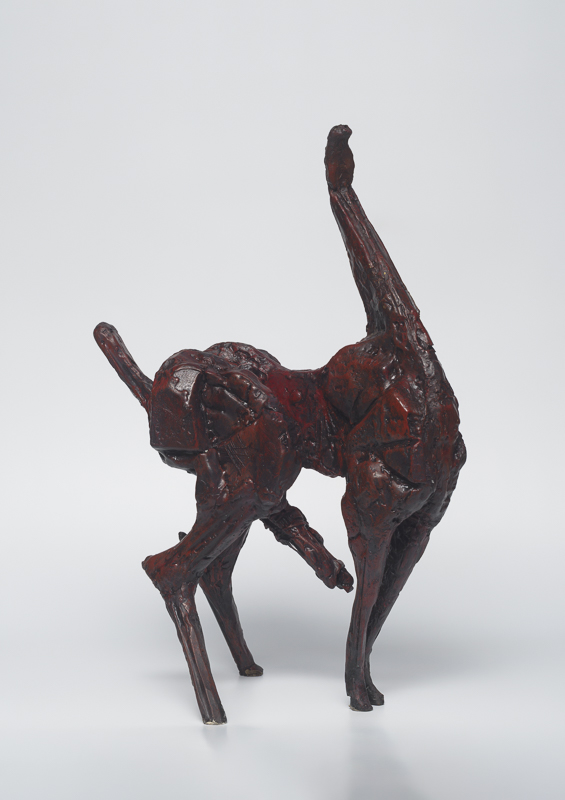
In this provocative sculpture, Kurt Lossgott transforms a headless beast into a metaphysical engine of tension and desire. The torso curves backward, forming the bow; a massive phallic arrow projects forward. Part protest, part comic outburst, the work is erotic but grotesque. It belongs to the Spirit Series, where hybrid creatures probe the junction between instinct and consciousness. Headless yet purposeful, it embodies raw masculine will before thought can tame it. Motion is created by tension, desire by distance: to fly, the body must first be drawn back.

Lost Spirit

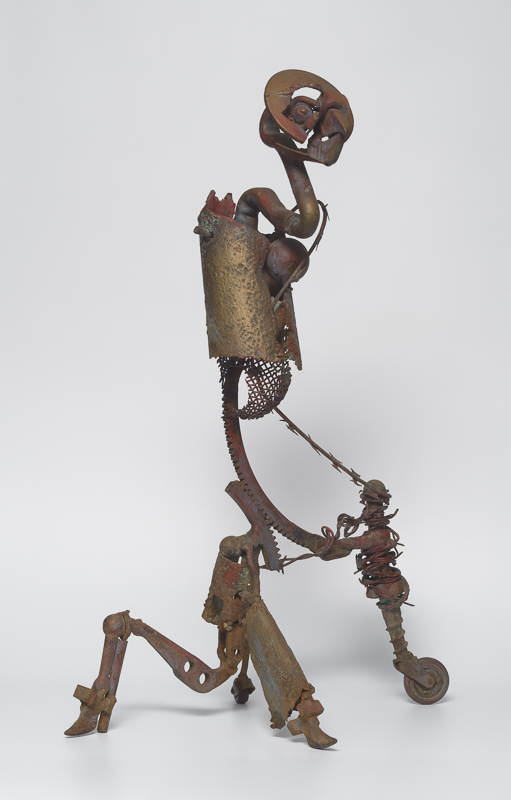
Welded scrap-metal figure in gold and red, beak-like mouth, large eyes, wheel-leg — gender in flux.

This welded scrap-metal figure — painted boldly in gold and red, wearing mesh underwear and balanced on three legs (one a wheel) — is humorous and unsettling at once. Its large eyes and beak-like mouth turn identity into masquerade; its stance is a body trying to find a pose. For Lossgott the piece was never a joke but part of his core question: how spirit seeks form. Unlike his proud horses or defiant Lucifer, this figure never fully arrives — gender, grace, certainty all remain in flux. In that flux lies the work's power: a meditation on bodies that do not fit inherited templates yet insist on visibility.

also known as The Lost Spirit of a Transvestite (original title)

Spirit of Africa

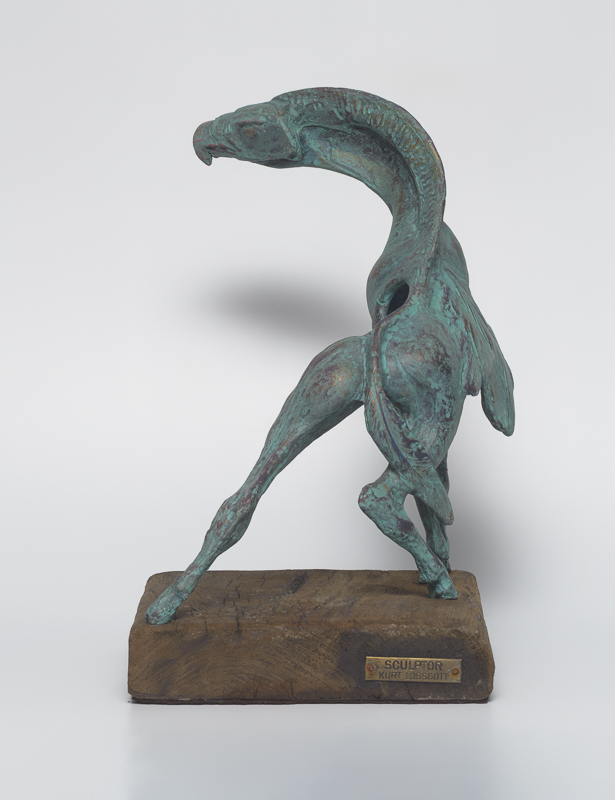
Bronze allegory fusing eagle, fish, earth, fire — inner vision beyond the veil.

Spirit of Africa fuses parts of eagle, fish, and equine forms into a single allegorical bronze, reflecting Lossgott's elemental vision: “Eagle for air / Gill of a fish, for water / Bound by gravity to earth… Fire and thoughts are the intangible elements.” The figure's closed eyes suggest inner sight — seeing beyond the horizon. Textural modelling evokes feathers, fins, and hooves, uniting disparate creatures into a mythic totem. Cast in bronze with subtle patina, the sculpture stands as an invocation: spirit transcending taxonomy, rooted in both region and imagination.

Read more about Spirit of Africa →

Transformation (Amandla)

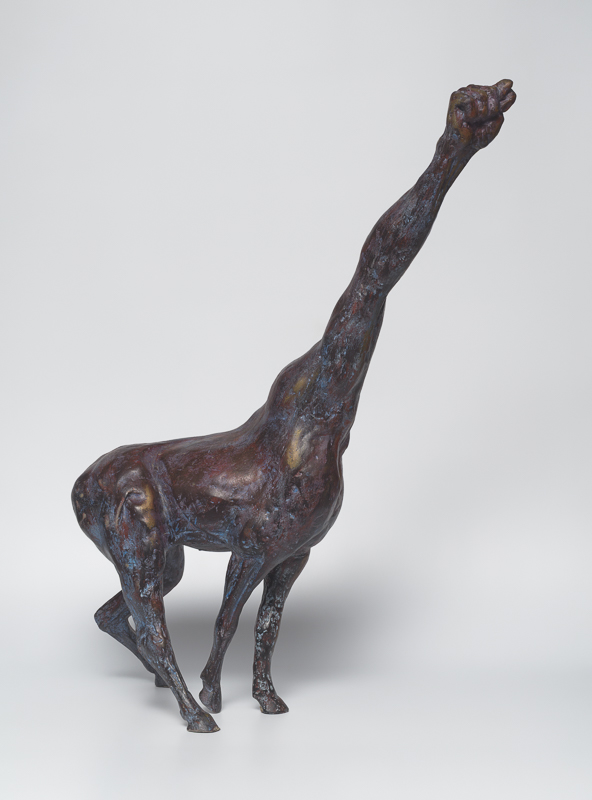
Animal body topped by a human fist: defiance, power salute, and phallic gesture.

A beast with the body of a bull and the head of a raised human fist, Transformation erupts with layered meaning. The posture is defiant, playful, almost boyish — like a teenage prank at full volume. The sculpture reads as part protest, part phallic charge, part comic outburst. For some, the raised fist evokes liberation slogans — “Amandla!” — while others insist it's the “zap” sign, a crude joke. Either way, this hybrid creature is not shy. It demands to be seen. It's muscular, erect, both humorous and forceful — like power before it learns self-control. Part of Lossgott's Spirit Series, the piece explores how instinct, sex, rebellion, and spirit coexist in the same body. There is no face. Just muscle, motion, and the idea of resistance.

Lame Bison

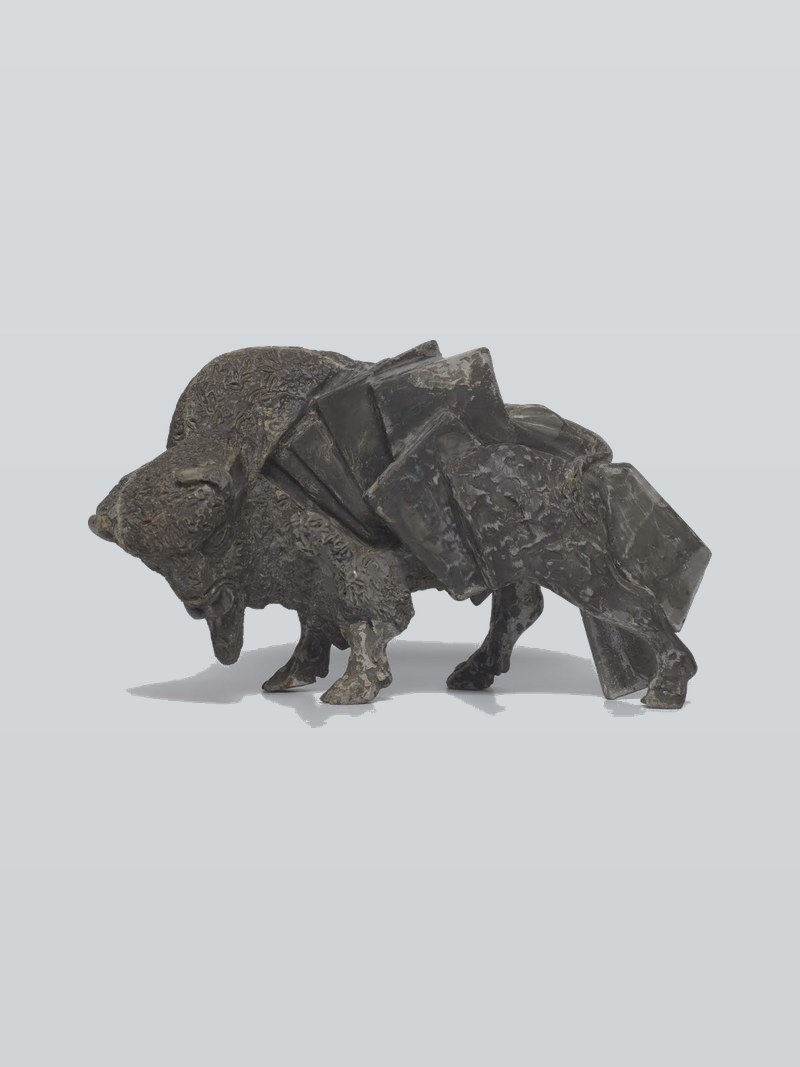
Bronze bison with geometric hind-leg fragments — endurance.

Lame Bison was made as a trophy for PG Bison — a South African board manufacturer that ran a corporate award and commissioned sculpture for its prize. A solitary bison whose hind legs break into geometric fragments, cast in resin at smaller scale than most of Lossgott's work — a sturdy front set against a fractured rear, caught mid-step.

Bittereinders

Entangled buffalo heads and legs, a tangle of conflict and endurance.

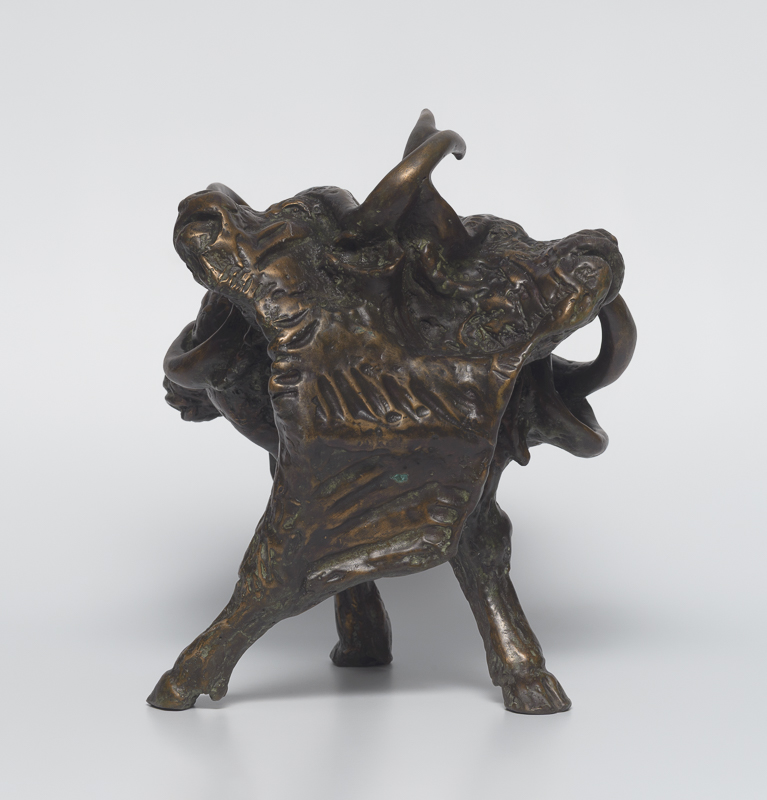
Bittereinders presents a tangled mass of buffalo heads and limbs, cast in bronze and resin. The interwoven forms — horns colliding, legs knotted — create a labyrinth of muscle and hide. The Afrikaans title, meaning “those who endure,” alludes to both historical fighters and the animals' mutual struggle. Lossgott's composition transforms conflict into solidarity: in their entanglement, the buffaloes become one communal form. This allegory of endurance and unity reflects the artist's fascination with opposing forces merging into collective strength.

also known as Buffalo Clash (catalogue)

Photographed in three finishes.

Lucifer

Suspended chrome-winged fallen angel of light, a private manifesto.

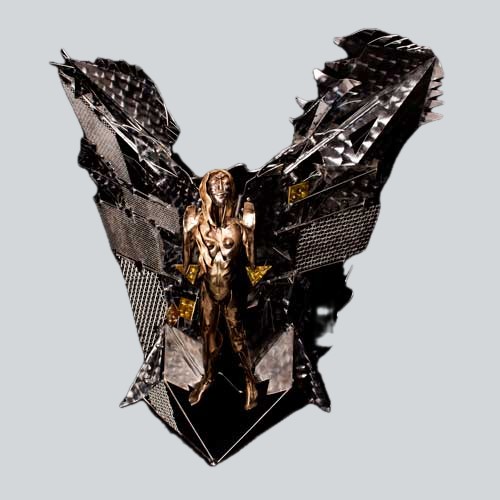
Suspended in the entrance hall of Lossgott's home, Lucifer remained private. Born from a pilgrimage to the spiritual healer John of God in Brazil, undertaken during decades of multiple sclerosis, the figure embodies the fallen angel of light — once the most beautiful of God's creations. Polished chrome wings twist into grids that evoke machinery or circuitry, symbolising spirit caught in modern systems. In his final years, Lossgott dismantled and intended to rework the sculpture — adding golden hair and repositioning rebellious limbs to clarify its meaning. He read Lucifer not as evil but as the bringer of light — the prodigal son who walks away in order to come home different. “The need to be rebellious, to ask questions on established habits and laws,” he wrote, “is the nature of those who one day will change it all.” Unfinished, Lucifer endures as the artist's personal theology made manifest.

The Dragon

Skeletal wooden dragon with broad wings and comic, spectral eyes.

Echoing the Flying Owl and Child, Lossgott's final completed sculpture, The Dragon is a polished-wood assemblage carved into bone-like ribs and outstretched wings. Comic, oversized eyes — reminiscent of Ted Hughes' eagle — lend a playful vigilance. Echoing his earlier steel eagles, this lighter, childlike counterpart was made shortly after his grandson's birth. It offers a farewell that looks forward: spirit released from struggle, smiling in skeletal wonder.

Where to next

These were the works Kurt kept. Lucifer hung above his hallway, unfinished. Twenty years earlier he had been asking the same questions through Tomorrow's Angels — bodies of bronze and resin, veiled and waiting.

See Tomorrow's Angels — the metaphysical thread, two decades earlier →